
Strictly controlled pharmaceutical cleanrooms, sterile compounding suites, and semiconductor manufacturing cells demand rigid access control, batch audit verification, and remote audio-visual collaboration. Regulatory mandates such as FDA 21 CFR Part 11 require continuous verification of operator identities during critical batch-release steps.
Traditionally, cleanroom personnel relied on manual badge swipes or shared password terminals. In sterile gowning environments, touching physical input hardware increases bio-burden cross-contamination risks. Modern installations replace manual entry with hands-free facial biometrics and two-way cleanroom intercom systems integrated directly into the operator interface.
1. Acoustic & Optical Sealing: Maintaining Cleanroom Barrier Integrity
Integrating optical lenses and sensitive microphone diaphragms into an airtight, washdown-rated enclosure introduces distinct physical challenges:
- Hermetic Acoustic Membranes: Microphones require air vibration to capture speech, yet cleanroom walls undergo washdowns with isopropyl alcohol (IPA) and vaporized hydrogen peroxide (VHP). Industrial terminals utilize hydrophobic, oleophobic ePTFE acoustic vent membranes that transmit sound pressure waves while maintaining an impervious barrier against liquid ingress and bacterial spores.
- Optically Coupled Optical Windows: Embedded cameras must focus through front protective glass. If an air gap exists between the camera sensor and the front fascia, internal reflections and sanitization fogging degrade facial verification accuracy. Factory-calibrated optical alignment eliminates internal refraction, ensuring rapid facial recognition under changing cleanroom lighting.
Deploying specialized platforms like the 15″ Stainless Steel Android Panel PC with Camera & Mic provides an integrated biometric and communication station, pairing edge processing with an impervious SUS304 front faceplate.
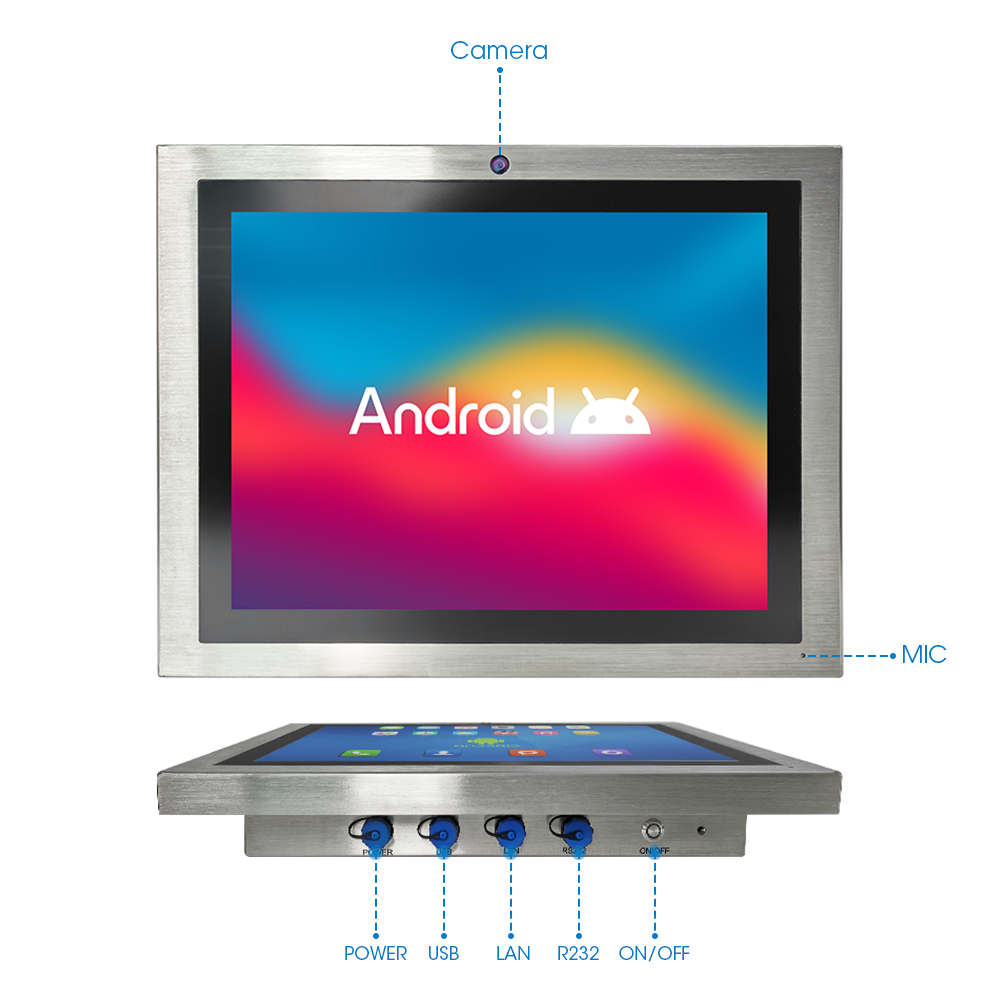
15″ Stainless Steel Android Panel PC with Camera & Mic
Engineered for sterile cleanrooms, biopharma manufacturing, and secure access corridors. Integrates an embedded high-resolution camera, sealed acoustic microphone, SUS304 washdown enclosure, and responsive Android edge computing.
2. Low-Latency Edge Processing on Industrial Android Architecture
Running local facial biometric neural networks and SIP audio-video intercom streaming simultaneously requires responsive edge computing. The integrated Android system offloads camera imaging pipelines to hardware video processing units (VPUs), processing video feeds with zero frame drops while running standard electronic batch record (EBR) mobile applications.
Cleanroom Verification Terminal Architecture Matrix
| System Feature | External Add-On Peripherals | Integrated Stainless Steel Android HMI |
|---|---|---|
| Sanitary Profile | Exposed cables and brackets harbor bio-films | Seamless true-flat front surface; zero crevices |
| Disinfection Tolerance | Consumer webcams cloud under IPA/VHP wipe | Chemically tempered 7H glass; impervious to VHP |
| Intercom Acoustic Quality | Muffled behind makeshift protective bags | Engineered ePTFE acoustic membrane clarity |
Designing a hands-free cleanroom verification station or sterile manufacturing intercom console? Contact INNODA’s cleanroom integration team for acoustic membrane specifications, camera optical diagrams, and sanitary mounting options.