
Commercial sportfishing captains, offshore survey vessel integrators, and marine electronics OEMs have historically relied on passive helm monitors tethered to proprietary external black-box chartplotter hosts. Upgrading to a standalone marine chartplotter and fishfinder panel PC—available in scalable 12.1-inch, 15.6-inch, 18.5-inch, and 21.5-inch widescreen formats—integrates an onboard Rockchip RK3576 (Android) or Intel N100 (Windows/Linux) processor, high-precision GNSS GPS receiver, and native NMEA 2000 / NMEA 0183 interfaces directly inside a full IP67 CNC aluminum marine enclosure.
⚡ Commercial & Engineering Executive Summary (Key Technical Takeaways):
- True Standalone Computing (RK3576 / Intel N100): Eliminates external proprietary chartplotter black boxes, running OpenCPN, Navionics, TimeZero, and CHIRP sonar apps directly on-device across 12.1″, 15.6″, 18.5″, and 21.5″ screens.
- 1500 Nits + Polarized Sunglasses Readability: Quarter-wave optical retarder film and zero-air-gap OCA bonding eliminate polarized lens blackout while delivering 10.33:1 contrast under 100,000-lux ocean glare.
- Direct NMEA 2000 / 0183 & Integrated GPS: Plug-and-play M12 CAN bus interface ingests depth sonar, AIS targets, engine telemetry, and 10 Hz GNSS positioning with < 10 ms latency.
When engineering open-flybridge and center-console helm stations across modern sunlight readable hmi marine deployments, eliminating polarized sunglasses blackout and internal salt-air fogging is critical. For a deeper optical breakdown, review our engineering analysis on optical bonding vs. air-gap contrast performance in marine displays.
1. NMEA 2000 CAN Bus Determinism & Polarized Optical Bonding Physics
Offshore vessels depend on instantaneous Parameter Group Number (PGN) telemetry across the NMEA 2000 (ISO 11783-3 / SAE J1939) backbone alongside unobstructed optical clarity when helmsmen wear polarized fishing sunglasses:
NMEA 2000 Backbone Telemetry Timing & Polarized Optical Contrast Equation: 1. NMEA 2000 Bus Physical Layer (250 kbps Differential CAN, 120-Ω Terminated Backbone): – Bit Period: T_bit = 1 / 250,000 = 4.0 μs; Standard 8-Byte PGN Frame (≈ 111 bits): t_frame = 0.444 ms. – High-Priority Bathymetric Depth & Heading PGN Latency: < 10 ms deterministic bus arbitration across up to 50 marine sensors. 2. Polarized Sunglasses Blackout Elimination & 1500-Nit Contrast: – Standard LCD Linear Polarizer + Polarized Sunglasses (Crossed Axis θ = 90°): Malus’s Law I = I_0 × cos²(90°) = 0% (Screen turns completely black!). – Quarter-Wave Retardation Film + OCA Optical Bonding (R ≤ 0.5%): Converts linear output to circularly polarized light, sustaining 10.33:1 Ambient Contrast Ratio at 100,000 lux across every head tilt angle.
Because the CNC-machined marine-grade aluminum housing is anodized against saltwater corrosion and sealed to Full IP67, breaking waves and heavy salt spray never penetrate the chassis.
To replace multi-box legacy helm setups with a single high-speed navigation and sonar terminal, marine integrators deploy the 12.1″ / 15.6″ / 18.5″ / 21.5″ Full IP67 Marine Chartplotter & Fishfinder Panel PC, available with gimbal yoke brackets or flush helm mounting.
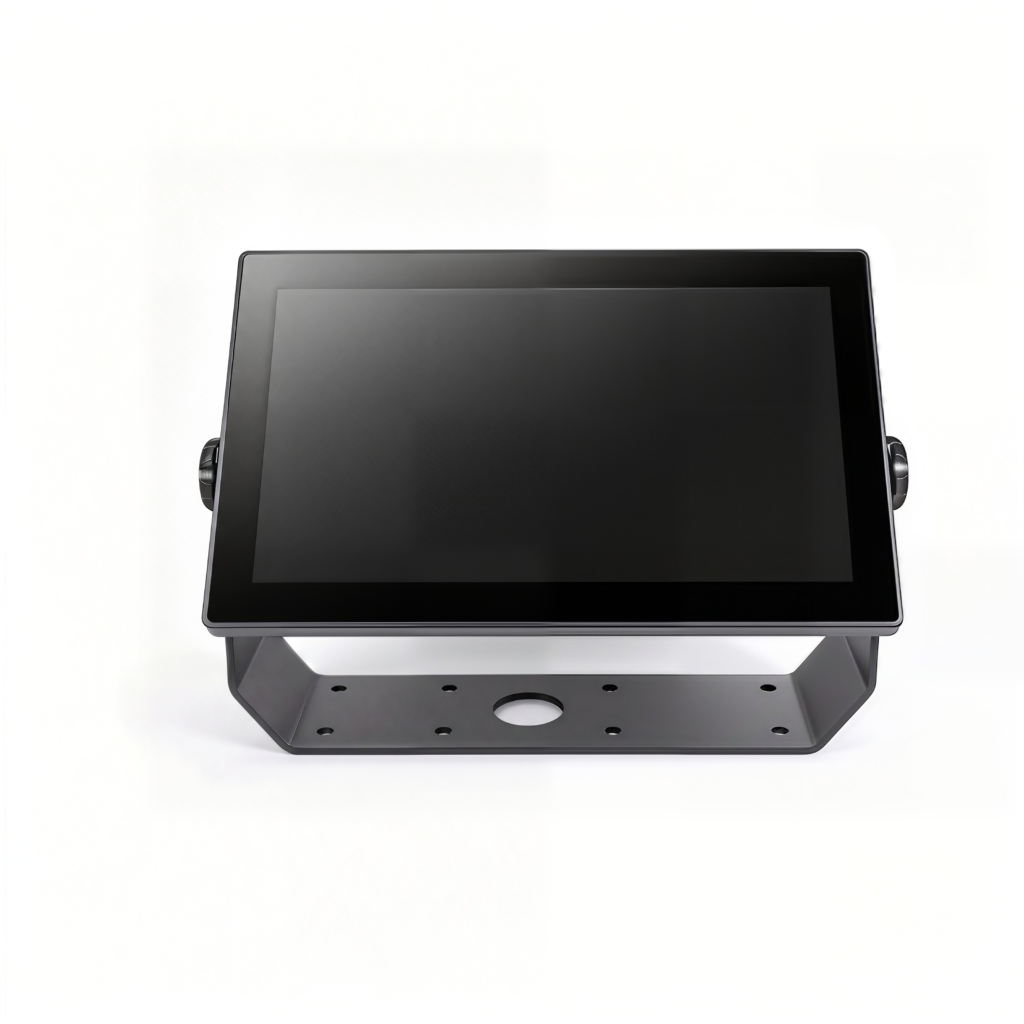
12.1″-21.5″ Standalone Marine Chartplotter Panel PC
Available in 12.1″, 15.6″, 18.5″, and 21.5″ formats with built-in Rockchip RK3576 (Android) or Intel N100 (Windows/Linux) CPUs. Features 1500-nit polarized-readable OCA bonded optics, Full IP67 CNC aluminum housing, NMEA 2000/0183, integrated GPS, and DC 9V-36V power.
Passive Display + External Host vs. INNODA Standalone Marine Panel PC
| Marine Helm Factor | Legacy Monitor + External Black Box | INNODA Standalone Marine Panel PC |
|---|---|---|
| Onboard Computing Core | Passive display only; requires separate host | Built-in Rockchip RK3576 (Android) or Intel N100 |
| Available Screen Sizes | Limited fixed size options | 12.1″, 15.6″, 18.5″, and 21.5″ full lineup |
| Polarized Lens Clarity | Blacks out when wearing polarized sunglasses | 1500 Nits + circular polarizer + OCA bonding |
| Marine Sensor Networking | Requires external NMEA-to-USB gateway boxes | Native NMEA 2000 / 0183 + built-in GPS |
| Saltwater Enclosure Rating | IP65 front only; rear HDMI cables corrode | Full IP67 CNC marine aluminum + M12 ports |
2. Frequently Asked Questions (Engineering & Procurement FAQ)
Q1: Should we choose the Rockchip RK3576 (Android) or Intel N100 (Windows/Linux) CPU option for our vessel?
Choose the octa-core Rockchip RK3576 if you run Android marine navigation apps (such as Navionics, OpenCPN Android, or custom marine APK dashboards) with ultra-low power draw. Choose the Intel N100 quad-core x86 option if you run Windows-based TimeZero, Nobeltec, or PC hydrographic survey software.
Q2: Can the touchscreen handle saltwater splashes and rain without triggering false chartpanning?
Yes. Our marine-tuned projected capacitive (PCAP) firmware rejects continuous saltwater spray and breaking wave wash while accurately tracking wet fingertips.
Q3: What mounting styles are supported across the 12.1″ to 21.5″ marine sizes?
Every size supports heavy-duty U-shaped gimbal bracket trunnion mounting (with angle-locking knobs for console tops), flush dash panel mounting, and standard rear VESA 75/100 mounting.
Upgrading sportfishing vessels, workboats, and offshore survey helms with 12.1-inch to 21.5-inch standalone marine chartplotter and fishfinder panel PCs eliminates external black-box clutter and delivers crisp 1500-nit polarized visibility. Contact INNODA’s marine electronics engineering team to request 3D CAD drawings, NMEA 2000 pinout specs, and volume OEM quotes.