
In high-speed food packaging lines, aseptic dairy filling tunnels, and beverage bottling plants, automated processing machinery operates under rigorous sanitation standards. To prevent biological contamination and meet FDA and European food hygiene directives, production lines undergo daily Clean-In-Place (CIP) and Clean-Out-of-Place (COP) sanitation protocols.
During washdown cycles, cleaning crews spray rotating wands of 80°C hot water and caustic chemical sanitizers—including sodium hypochlorite, peracetic acid, and concentrated lye—at pressures reaching 100 bar (1,450 PSI). Standard commercial terminals and generic touchscreens fail rapidly: thermal shock deforms perimeter rubber gaskets, caustic acids pit unanodized metal shells, and pressurized steam penetrates internal processor logic boards.
Maintaining uninterrupted bottling throughput requires Sanitary Washdown Computing Platforms engineered to survive aggressive chemical and thermal cycles.
Food Packaging Sanitation Stress vs. Engineered Hardware Defenses
| Sanitation Stress Factor | Standard Computing Failure Mode | Sanitary Engineered Hardware Solution |
| High-Temperature Steam (80°C) | Gaskets blow out from rapid thermal expansion | Precision fluororubber seals with balanced thermal expansion |
| Caustic CIP Washdown Chemicals | Pitted aluminum, blistered paint, clouding acrylic | Laser-welded 304/316L stainless steel or hard-anodized alloy |
| Direct High-Pressure Nozzles | Water enters speaker holes and ventilation grilles | Full IP65/IP67/IP69K 360-degree hermetically sealed chassis |
| Wet Glove Operator Interaction | Capacitive touch false triggers or drops cursor | Water-droplet rejection firmware with wet-glove sensitivity |
| Sudden Post-Wash Cooling | Internal condensation fogs the inner glass pane | Full vacuum optical bonding permanently eliminates fogging |
Preventing Chemical Corrosion in Washdown Enclosures
The chemical composition of sanitation detergents aggressively attacks standard industrial metals:
- Alkaline foaming agents dissolve standard zinc-plated screws and react with non-passivated aluminum, causing white rust and structural fatigue.
- Deploying heavy-duty washdown displays—such as the 21.5″ Full IP67 Stainless Steel Waterproof Touch Industrial Monitor —utilizes laser-welded food-grade stainless steel housings that resist chemical pitting and prevent biological bacteria harborage.
- Its smooth, crevice-free front bezel prevents residual milk, juice, or meat particles from lodging in corners, speeding up washdown routines.
Surviving Pressure Blasts on Standalone Machinery Skids
On standalone packaging machines and sorting conveyances, touch computers are mounted on swing-arms directly in the wash zone:
- Traditional panel-mount designs with open rear ventilation cannot survive exposure outside a secondary cabinet.
- Utilizing sealed workstations like the 15″ Full IP67 Waterproof CNC Aluminum Industrial Panel PC ensures that all rear electrical connections route through circular twist-lock aviation ports.
- Its sealed fanless metal casing absorbs heat passively through solid metal conduction, maintaining full CPU operational speeds inside hot packaging rooms without sucking in airborne flour, sugar dust, or steam.
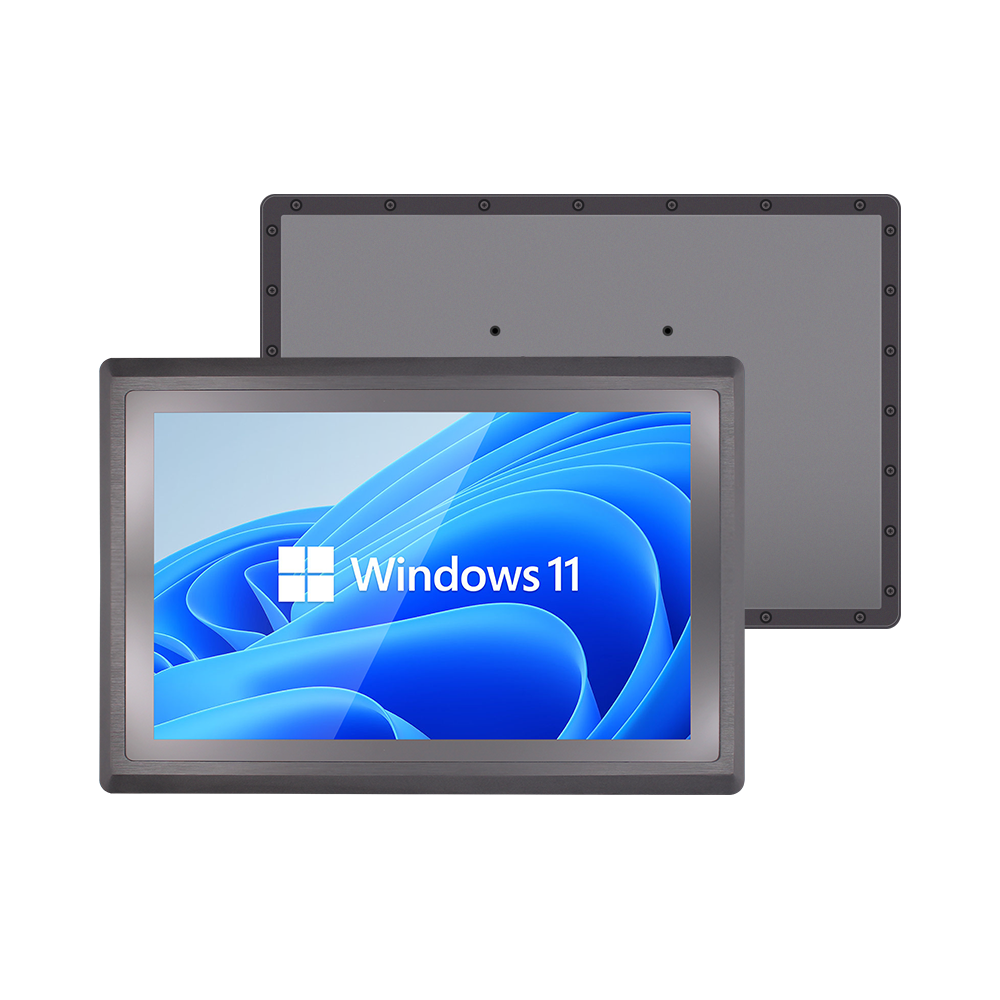
15″ Full IP67 Washdown Industrial Panel PC
Fully sealed CNC aluminum and steel enclosure with twist-lock aviation connectors, 4:3 industrial XGA display, and fanless passive thermal conduction for food packaging.
Engineering Summary for Food Processing Automation
- Mandate IP67 or IP69K full-body ingress protection whenever computing terminals are exposed to direct high-pressure hose-downs.
- Specify Optical Bonding to eliminate interior lens fogging caused by sudden cold washdown water contacting warm operating displays.
- Ensure all operator touchscreens support thick nitrile and rubber glove calibration to prevent line operators from having to remove hygiene gear to log batch data.
Outfitting food packaging machinery, automated filling skids, or pharmaceutical cleanrooms? Contact INNODA’s sanitary industrial computing team for material compliance datasheets, chemical resistance charts, and evaluation units.