
Modern computerized numerical control (CNC) machine tools, high-speed milling centers, and automated stamping presses subject human-machine interface (HMI) consoles to severe environmental stresses. Rotating spindles running at 24,000 RPM, rapid tool changers, and hydraulic clamp cycles transmit continuous harmonic vibrations into machine frames.
Simultaneously, mist collectors generate airborne coolant aerosols composed of mineral oils and water emulsions. Specifying an HMI for continuous operation alongside heavy cutting equipment requires addressing two interrelated failure mechanisms: structural harmonic fatigue under IEC 60068-2-6 shock profiles and thermal dissipation failure inside unventilated machine consoles.
1. Dynamic Structural Fatigue: Eliminating Mechanical Resonance
Standard commercial computers rely on active sleeve-bearing or ball-bearing cooling fans. In a CNC environment, mechanical spindle vibrations cause rapid fretting wear on fan bearings, resulting in fan seizure within 3,000 to 5,000 operating hours. Once airflow stops, internal enclosure temperatures exceed 70°C within minutes.
Industrial CNC terminals eliminate rotating components entirely through solid unibody construction. When evaluating structural damping against continuous plant vibrations (10 Hz to 500 Hz, 2G acceleration), deploying a reinforced system like the 15.6″ CNC Fanless Industrial Touch Panel PC ensures the internal circuit boards are mounted via elastomeric standoffs, preventing micro-cracking across soldered BGA processor pins.
For installations situated in open outdoor yards or washdown metal fabrication bays where external protective covers are required during high-pressure machine cleanups, deploying a rugged unit such as the 17″ Full IP67 CNC Rugged Panel PC with Cover shields sensitive PCAP touch sensors from stray flying chips and pressurized washdown jets.
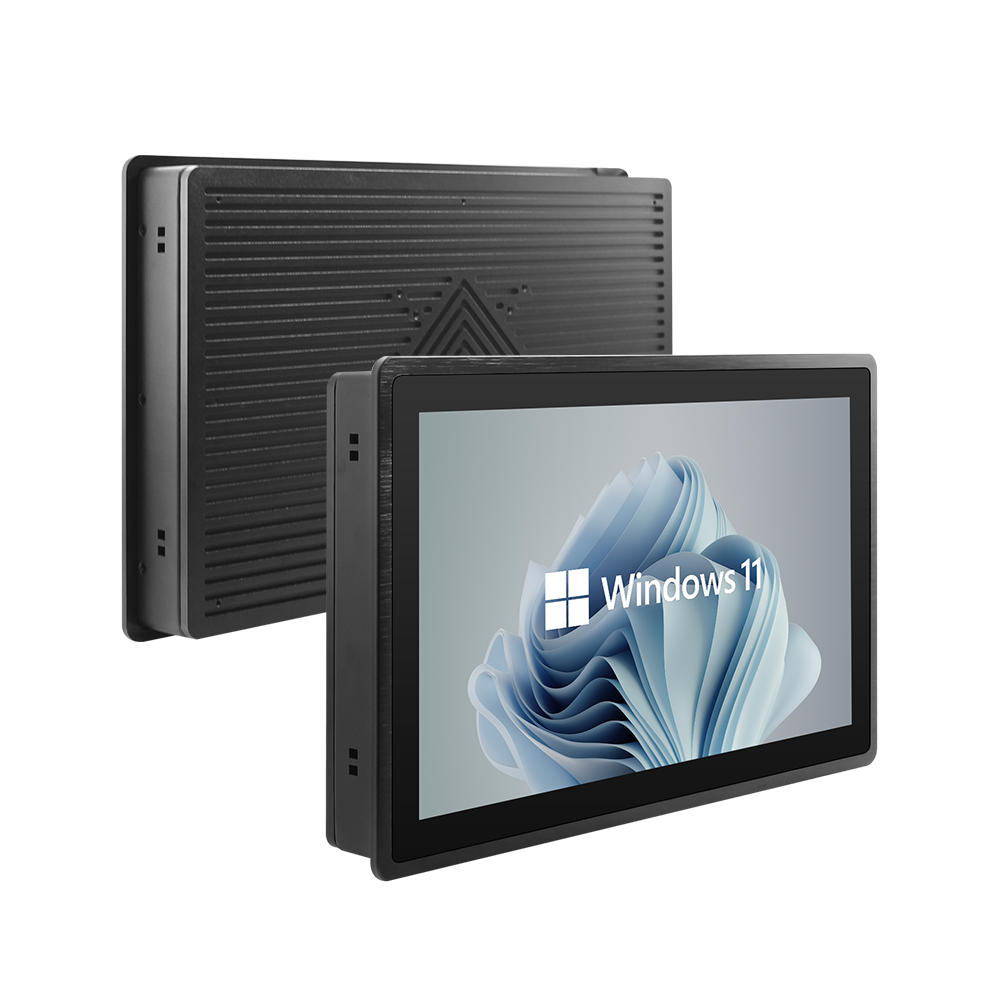
15.6″ CNC Fanless Industrial Touch Panel PC
Engineered for demanding CNC milling machines and metal fabrication lines. Features a solid CNC-machined aluminum chassis, zero-noise fanless cooling, high vibration immunity (IEC 60068-2-6), and an IP65 true-flat PCAP multi-touch interface.
2. Thermal Conduction Physics: Sintered Heat Pipes vs. Extruded Fins
Inside a sealed CNC console, processor heat must escape through conduction across the chassis. Mechanical engineers balance two primary thermal architectures:
- Monolithic Extruded Aluminum Conduction: Direct-contact copper blocks route heat directly into the rear 6063-T5 aluminum chassis via thermal interface materials (TIM with thermal conductivity k ≥ 4.5 W/m·K). This approach provides zero moving parts and indefinite mechanical life.
- Sintered Copper Heat Pipes: High-TDP processors utilize two-phase copper heat pipes containing evacuated water wick structures. Heat vaporizes the working fluid at the CPU evaporator end, traveling at sonic speed to the outer fin condenser before capillary action returns the liquid. This system provides an equivalent thermal conductivity exceeding k ≥ 10,000 W/m·K, preventing processor throttling during intensive multi-axis toolpath rendering.
CNC Enclosure Engineering Matrix
| Parameter | Standard Commercial Chassis | Precision CNC Machined Enclosure |
|---|---|---|
| Vibration Compliance | Unrated; prone to loose ribbon cables | IEC 60068-2-6 / MIL-STD-810G (2G, 5–500 Hz) |
| Oil-Mist Ingress | Porous fan grilles pull coolant inside | 100% Sealed fanless IP65/IP67 chassis |
| Thermal Dissipation | Degrades rapidly as dust clogs fins | Conductive unibody heat spreader (Stable MTBF) |
Upgrading your machine tool line or automated CNC machining center with vibration-proof computing? Contact INNODA’s mechanical integration team for structural CAD models and dynamic vibration test reports.