Circular threaded and twist-lock aviation connectors (such as M12 and industrial military-style bayonet plugs) represent the gold standard for maintaining Full IP67/IP68 ingress protection on washdown industrial panel PCs, marine displays, and mobile machinery. By utilizing internal elastomeric O-rings and keyed metal barrels, they protect vital power and signal lines from water jets and heavy vibration.
However, even military-grade connectors are susceptible to improper field maintenance. When a sealed computing terminal suddenly drops its Ethernet link during a washdown shift, or when DC power cuts out intermittently, technicians often replace the entire industrial computer. In over 85% of field cases, failure originates in damaged mating pins, dry-rotted O-rings, or capillary siphoning through unsealed cable jackets.
Following a systematic mechanical and electrical inspection workflow restores watertight reliability in minutes.
Waterproof Aviation Connector Failure Diagnostic Matrix
| Observed Field Failure | Primary Mechanical Root Cause | Diagnostic Verification Test | Field Corrective Action |
| Gigabit Link Drops to 10 Mbps / Disconnects | Bent or recessed female gold contact pin | Visual magnifier inspection of pin alignment | Re-align pin with non-conductive probe; replace plug |
| Corrosion Inside Connector Housing | Cracked, dry-rotted, or missing fluororubber O-ring | Inspect radial O-ring for flattening or micro-cracks | Install fresh Viton/fluororubber O-ring; lube with dielectric grease |
| Intermittent DC Power Reboot Under Vibration | Loose threaded collar; insufficient tightening torque | Check mechanical collar hand-tightness | Tighten collar to 0.6 Nm using calibrated torque wrench |
| Water Enters Port While Mated Correctly | Capillary siphoning through nicked outer cable jacket | Inspect incoming cable jacket for cuts & flat spots | Replace cable harness; install drip-loop strain relief |
Step 1: Inspecting and Servicing Internal O-Rings
The internal radial O-ring provides the primary hydraulic seal preventing pressurized water from entering the contact cavity:
- The Dry-Rot Problem: Exposure to caustic CIP washdown chemicals, direct sunlight UV, and seasonal thermal swings causes standard nitrile rubber O-rings to lose elasticity and crack over time.
- Field Inspection: Unscrew the outer metal collar and use an inspection light to examine the circular O-ring seated in the receptacle base. If the ring appears flattened, shiny, or brittle, water will bypass the seal under pressure washing.
- Remediation: Replace worn seals with genuine fluororubber (FKM/Viton) O-rings. Apply a microscopic film of pure synthetic dielectric silicone grease to lubricate the ring, preventing it from binding or twisting during collar tightening.
Step 2: Checking for Pin Misalignment and Blind-Mating Damage
Aviation connectors incorporate mechanical keyways (A-code, D-code, X-code) to ensure pins align correctly before mating:
- When technicians connect cables blindly behind tight machinery mounting arms, forcing the collar while misaligned crushes the delicate male pins against the plastic carrier.
- A bent pin may make intermittent contact when stationary, but disconnects instantly when the machine vibrates during production runs.
- Platforms engineered with fully sealed housings—such as the 15″ Full IP67 Waterproof CNC Aluminum Industrial Panel PC —feature keyed twist-lock collars with external tethered rubber caps, protecting unused ports from accidental pin contamination.
- For larger widescreen washdown consoles, systems like the 17.3″ Full IP67 Waterproof CNC Aluminum Industrial Panel PC utilize heavy-gauge circular connectors engineered for thousands of mate/unmate cycles.
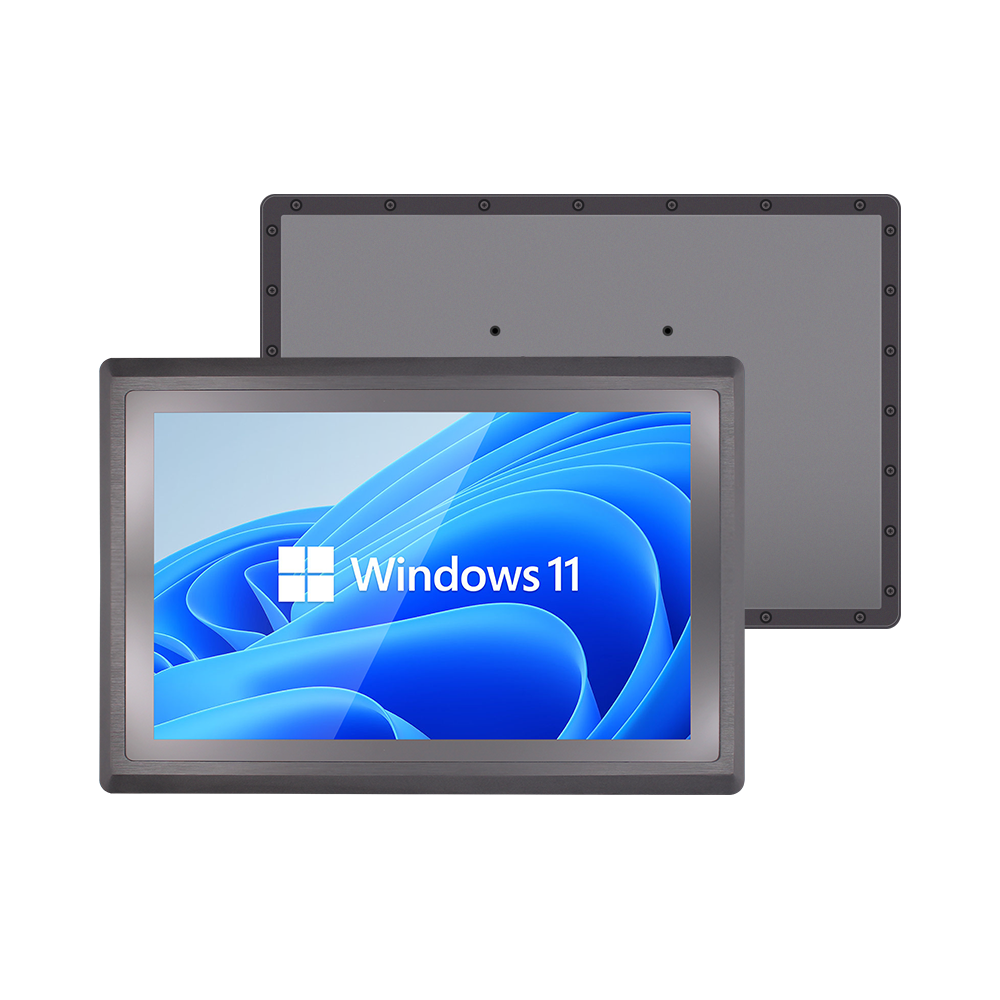
15″ Full IP67 Waterproof CNC Aluminum Industrial Panel PC
Equipped with 6 × twist-lock circular aviation ports, 4:3 industrial XGA display, sealed powder-coated steel chassis, and fanless passive thermal conduction for extreme washdowns.
Step 3: Stopping Capillary Cable Siphoning
Even if the connector collar is sealed perfectly, water can enter through the cable itself:
- If the outer polyurethane (PUR) cable jacket is punctured or pinched by a sharp sheet-metal edge 50 cm away, water pools inside the cable core.
- Internal temperature cycling creates a vacuum effect, drawing water along the internal copper strands directly through the back of the connector pins into the terminal housing.
- Preventive Action: Inspect all cable runs for cuts, maintain generous bend radiuses, and install downward drip loops before cables enter the chassis.
Preventive Routine for Field Technicians
- Inspect O-Rings Semi-Annually: Clean off accumulated grit and re-lubricate with dielectric grease.
- Tether Unused Port Caps: Never leave an unsealed aviation socket open during washdown routines; always screw on protective rubber caps.
- Use Calibrated Connector Wrenches: Avoid overtightening with vice-grips, which strips the brass threads and deforms internal O-rings.
Facing persistent connector pin damage, water ingress issues, or custom cable harness challenges? Contact INNODA’s industrial hardware service team for replacement O-ring kits, pinout schematics, and custom over-molded cable assemblies.